The previous article in this series, How AI Is Changing B2B Buying, described five shifts in how B2B buyers research and choose vendors. Those shifts lead to a plain commercial fact. B2B companies lose deals in two different ways. Some never make the buyer shortlist or become preferred before the buyer gets in touch. Others become the preferred option and still lose the final decision. Marketing influences both outcomes, and the first one happens well before most pipeline reports show any activity.
B2B go-to-market comes down to two battles. The first is Win Shortlist and Early Preference: becoming familiar, correctly understood, shortlisted and preferred before buyer intent becomes visible. The second is Become Chosen: turning that preference into a decision the whole buying group can justify, approve and implement. The moment a buyer raises a hand connects the two. Marketing carries most of the first battle and shares the second with Sales.
Main points
- In the 6sense 2025 B2B Buyer Experience Report, the buying journey splits into roughly 60% Selection and 40% Validation.
- 94% of buying groups ranked their shortlist before engaging sellers, and the pre-contact favourite won 77% of the time (6sense, 2025).
- In 95% of purchases, the winning vendor was already on the buyer’s Day-One shortlist (6sense, 2025).
- Gartner found unhealthy conflict in 74% of B2B buying teams, and teams that reached consensus were 2.5 times more likely to report a high-quality deal (Gartner, 2025).
- Visible buyer intent changes Marketing’s role. Marketing keeps working alongside Sales after that moment.
What are the two GTM battles in B2B buying?
The two GTM battles describe the two points where B2B vendors win or lose a deal. Battle 1 takes place before buyer intent is visible, while buyers research on their own. Battle 2 begins when the buyer engages directly and the wider buying group tests the preferred option.
The table below compares the two battles side by side.
| Battle 1: Win Shortlist and Early Preference | Battle 2: Become Chosen | |
| When it happens | Before buyer intent becomes visible | After the buyer engages directly |
| The question | Can we become shortlisted and preferred before the buyer contacts us? | Can that preference become a decision the organisation can justify, approve and implement? |
| What losing looks like | The company is not discovered, is misunderstood, misses the Day-One shortlist or reaches it without becoming preferred | The deal goes to another vendor, stalls, ends in no decision or gets cancelled |
| What losing costs | No opportunity is created, or the vendor enters the process from a weak position | Win rates fall, sales cycles get longer, discount pressure grows and “no decision” outcomes become more common |
| Marketing’s role | Leads the work and builds the position Sales will inherit | Works with Sales to give each stakeholder the evidence they need |
Source: HiFuture, Two GTM Battles framework, 2026.
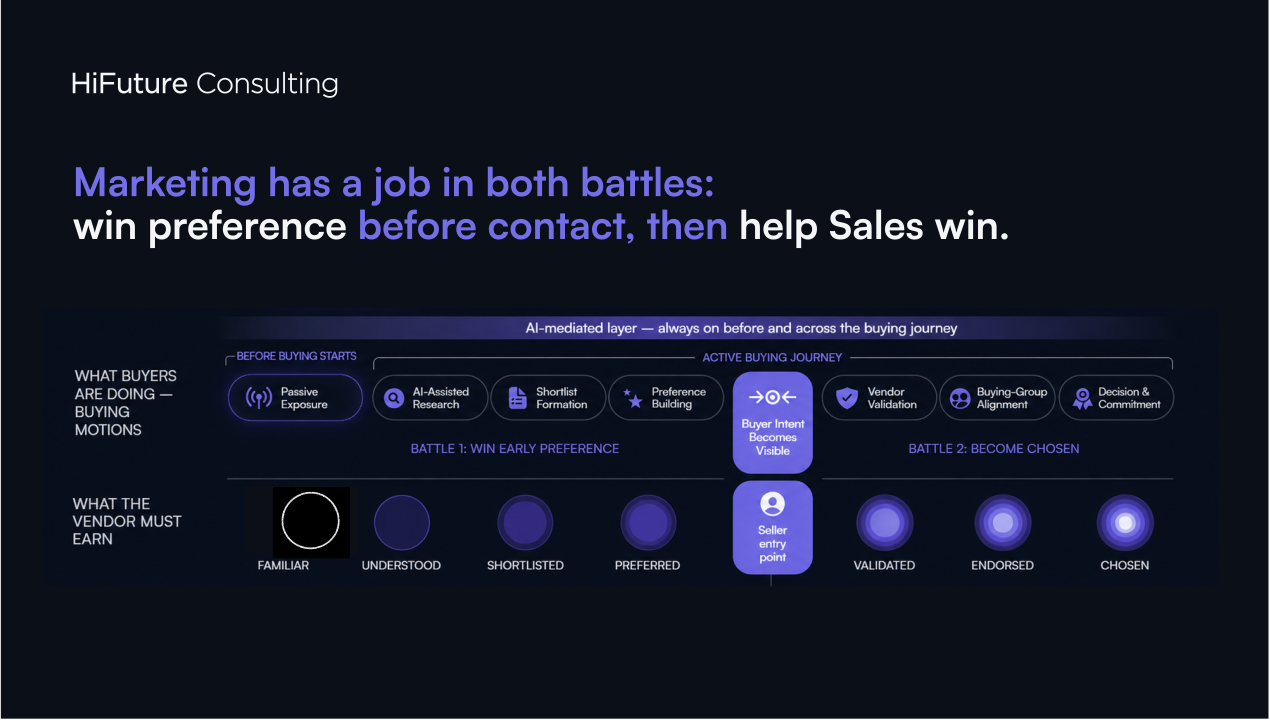
Figure 1. Marketing has a job in both GTM battles: win preference before contact, then help Sales win the decision. Source: HiFuture, 2026.
How much of the B2B buying journey happens before Sales gets involved?
According to 6sense, roughly 60% of the B2B buying journey happens before direct seller engagement. Its 2025 B2B Buyer Experience Report surveyed nearly 4,000 B2B buyers and described the journey as about 60% Selection and 40% Validation.
In the Selection phase, buying groups research the market, define requirements, build a shortlist and settle on a preferred vendor. The Validation phase begins with direct seller engagement. Here the buying group tests its preliminary choice before the final decision.
Real journeys rarely follow a neat 60/40 sequence. The split still shows something useful. By the time a buyer becomes visible to a vendor, they may already have researched the market, removed some vendors and formed an early preference.
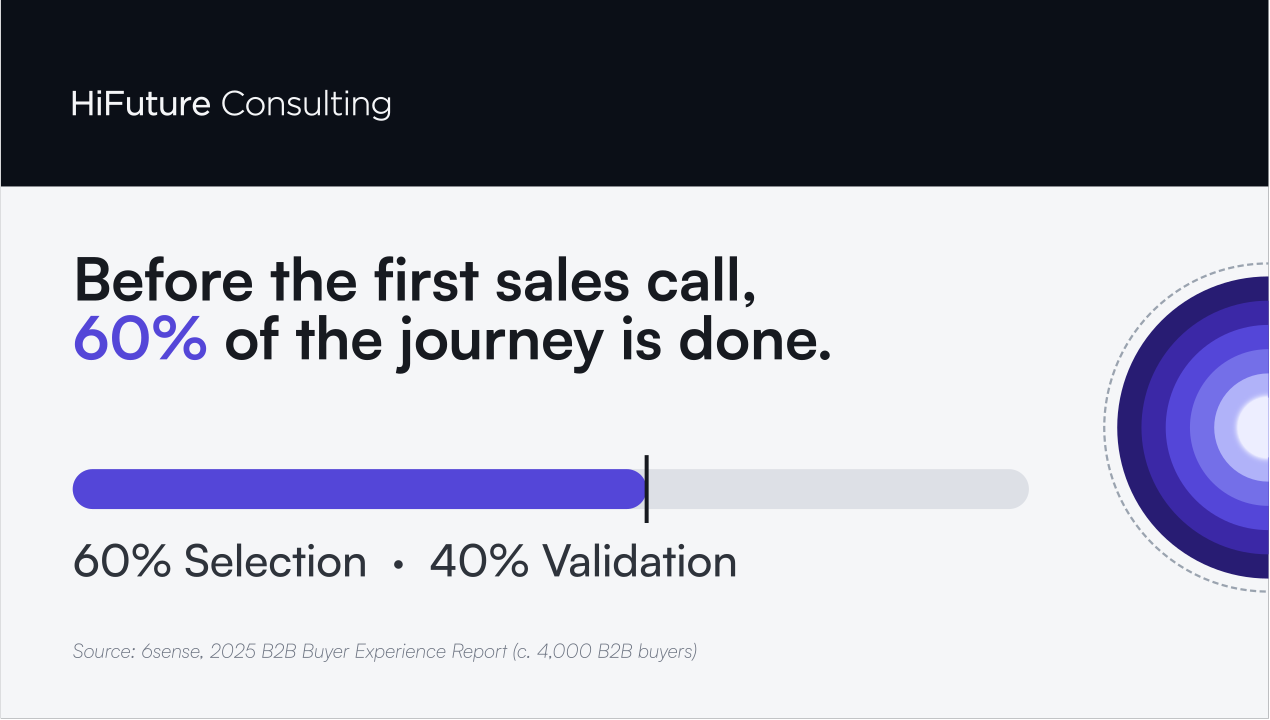
Figure 2. About 60% of the B2B buying journey happens before direct seller engagement. Source: 6sense, 2025 B2B Buyer Experience Report.
Why is losing the shortlist battle so hard to see?
Losing Battle 1 leaves no trace in the CRM. If a company is never discovered, gets misunderstood or misses the shortlist, there is no opportunity to record and no loss to analyse.
The 6sense data shows how much rides on this phase. 94% of buying groups had already ranked their shortlist before engaging sellers. The pre-contact favourite went on to win 77% of the time. In 95% of purchases, the winning vendor was already on the buyer’s Day-One shortlist.
HiFuture describes Battle 1 as a sequence of four states a company has to reach: familiar, correctly understood, shortlisted and preferred. Awareness and demand generation help with the first state. The other three depend on how clearly buyers, and the AI systems they use, understand what the company knows and why it deserves consideration.
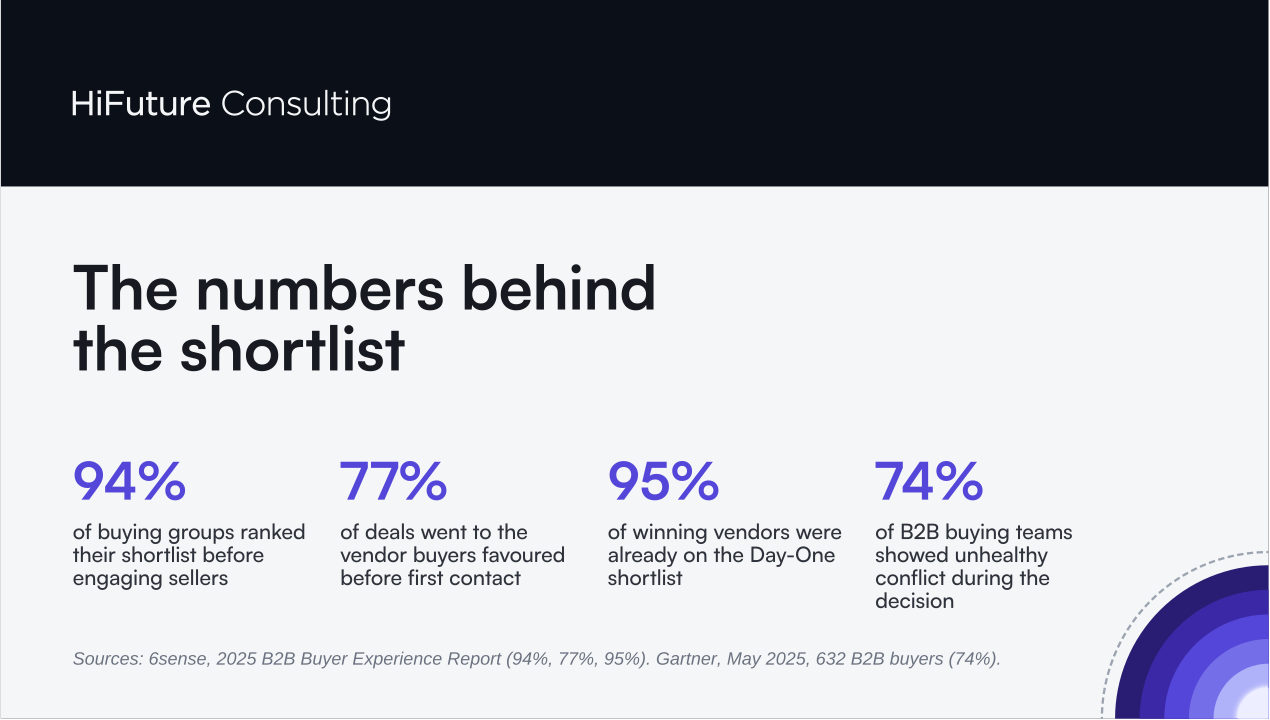
Figure 3. Where B2B deals are won and lost. Sources: 6sense, 2025 B2B Buyer Experience Report; Gartner, May 2025.
What happens when buyer intent becomes visible?
Buyer intent becomes visible when a buyer requests a demo, books a meeting, asks for an assessment or takes another step that signals real interest. From that point, Sales gains direct access to part of the buying process.
Sales sees only part of it, though. The person who raised a hand may represent one voice in a much larger buying group. Research, comparison, AI-assisted evaluation and internal discussion carry on in the background.
HiFuture treats this moment as the bridge between the two battles. Marketing’s role changes here. Before it, Marketing builds shortlist inclusion and early preference. After it, Marketing helps Sales and the wider buying group validate value, reduce risk and support the final decision.
Why does early preference still need to become a decision?
A preferred vendor holds a strong position, and the purchase still depends on the rest of the buying group. Finance may question the economics. Security may challenge the risk. IT may raise implementation concerns, Procurement may push on commercial terms and senior stakeholders may question strategic fit.
Gartner research among 632 B2B buyers found unhealthy conflict in 74% of buying teams. Buying groups that reached consensus were 2.5 times more likely to report a high-quality deal.
One champion rarely carries a decision on their own. Each stakeholder needs enough evidence to support the same choice from their own perspective. HiFuture calls this goal Collective Decision Confidence: the shared confidence a buying group needs to justify, approve and implement a decision.
What do the two GTM battles mean for CMOs?
The two battles change where Marketing creates commercial value. Three implications follow for CMOs and their teams.
Battle 1 makes Marketing part of the revenue system
Battle 1 can happen before Sales has any access to the buyer, and sometimes before the vendor knows a buying process exists. During that period, Marketing carries most of the responsibility for whether the company becomes familiar, understood, shortlisted and preferred. Marketing builds the commercial position that Sales inherits once buyer intent becomes visible, which is a much bigger job than lead generation.
Buyers and AI systems need a clear reason to shortlist the company
Before any direct contact, buyers need to understand what the company does, where it is credible and why it deserves serious consideration. Campaigns alone rarely provide that. Marketing has to make the organisation’s knowledge, visible expertise and independent validation easy to find and consistent across sources.
Visible buyer intent is a milestone in a process that continues
When a buyer raises a hand, Marketing’s role changes and keeps going. Sales gains direct access, and Marketing keeps strengthening the evidence and authority the wider buying group needs. Before engagement, Marketing carries more of the load. After it, Marketing and Sales support the buying group together.
How can a marketing team check its position in each battle?
A quick review of recent deals usually shows which battle costs more. These questions give a practical starting point.
For Battle 1:
- Ask ChatGPT, Gemini, Perplexity and Claude the questions your buyers ask about your category, and note whether your company appears.
- Check how many recent opportunities came from buyers who contacted you first.
- Ask your last five new customers which vendors they considered before they spoke to Sales.
- List the experts whose knowledge buyers should see, and check whether that knowledge is visible under their names.
For Battle 2:
- Review your last stalled or lost deal and list every stakeholder who raised a concern.
- Check whether you have content that answers the questions Finance, Security, IT and Procurement typically ask.
- Agree with Sales which evidence Marketing supplies after the first meeting.
Frequently asked questions
What are the two GTM battles?
The two GTM battles are HiFuture’s way of describing where B2B vendors win or lose. Battle 1, Win Shortlist and Early Preference, happens before buyer intent becomes visible. Battle 2, Become Chosen, starts when the buyer engages and the buying group decides whether it can justify, approve and implement the purchase.
What is a Day-One shortlist?
A Day-One shortlist is the group of vendors a buyer considers at the start of active buying. In the 6sense 2025 B2B Buyer Experience Report, the winning vendor was already on that shortlist in 95% of purchases.
Is Battle 1 the same as demand generation?
Demand generation supports Battle 1, and the battle asks for more. A company also has to be correctly understood, shortlisted and preferred before the buyer makes contact. That depends on how consistently its knowledge, expertise and external validation appear across the sources buyers and AI systems use.
Why do B2B deals stall after a buyer shows interest?
Many deals stall because the wider buying group has not reached consensus. Gartner found unhealthy conflict in 74% of B2B buying teams, and teams that reached consensus were 2.5 times more likely to report a high-quality deal.
Where the two battles leave Marketing
By the time an opportunity appears in the pipeline, a large part of the competition may already be over. The first battle decides whether a company gets shortlisted and preferred. The second decides whether that preference turns into a decision the buying group can defend. Marketing shapes both, with the heaviest load falling before the first sales conversation.
If you want to see how your company is building authority before buyers get in touch, we can go through it with you.
Book a free call with Katarzyna Sitarska