Many B2B companies already invest in AI visibility. They improve their websites, publish more content, activate experts, build thought leadership and PR, and make their knowledge easier for AI systems to find. The previous article in this series, on the Authority Signals Model™, described what a company needs to build. This one deals with the step that should come first: knowing where the company stands today.
An AI visibility assessment shows how AI systems represent a company when buyers research its category, its problems and its potential vendors. It also explains which authority gaps limit that position. HiFuture’s AI Visibility & Authority Assessment™ tests four types of buyer prompts (Brand, Category, Problem and Shortlist) and scores the authority system behind the results, so a CMO can see where to invest first.
Main points
- AI can describe a company accurately when asked about it by name and still leave it out when buyers ask about the category, the problem or a shortlist.
- Four prompt types show the full picture: Brand, Category, Problem and Shortlist.
- Visibility shows where a company appears. Authority helps explain why it may be missing.
- The assessment looks at Strategy & AI Readiness and at Company, Human and Third-Party Authority Signals.
- The most useful outcome is a clear order of priorities, which helps a marketing team avoid simply adding more activity.
Why is brand recognition in AI not enough?
One of the easiest tests is to ask an AI assistant: “What does [Company] do?” For an established organisation, the answer often looks perfectly reasonable.
Buyers who don’t know the company yet ask very different questions. They ask who can help them solve a problem, which companies specialise in an area and which vendors they should consider. A company can pass the branded test and still be absent from every one of those answers.
Brand recognition tells you whether AI knows you. Category, Problem and Shortlist visibility show whether you enter consideration when the buyer hasn’t decided to search for you.
What are the four types of buyer prompts?
HiFuture assesses AI visibility across four categories of buyer-research prompts. They follow the way a buyer moves from a name they already know towards a list of vendors to evaluate.
| Prompt type | Example question | What it reveals |
| Brand | “What does [Company] do?” | Whether AI knows the company and describes it accurately |
| Category | “Which companies specialise in [area]?” | Whether AI associates the company with the category it wants to own |
| Problem | “Who can help us solve [problem]?” | Whether AI connects the company with the problems it solves |
| Shortlist | “Which vendors should we consider for [need]?” | Whether the company enters consideration next to its competitors |
Source: HiFuture, AI Visibility & Authority Assessment™ method, 2026.
For each prompt type, the assessment answers four questions. Where does the company appear? Where is it absent? How is it interpreted? Who appears instead
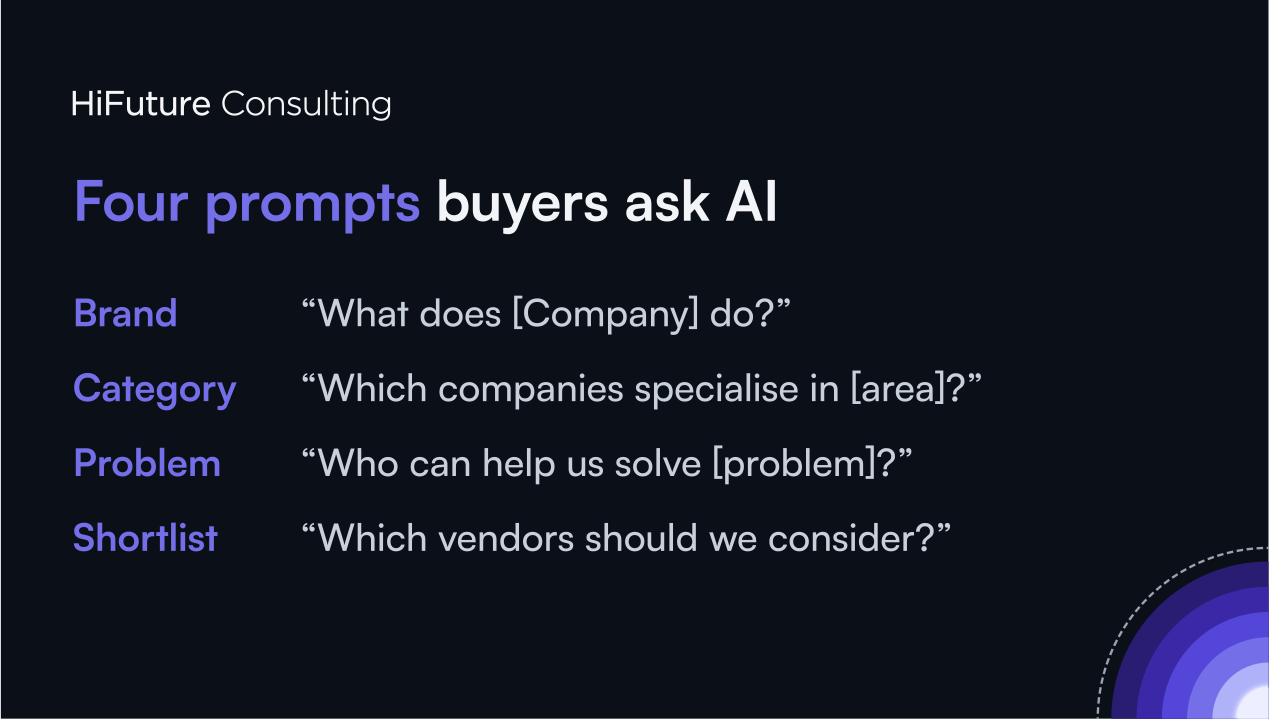
Figure 1. Four types of buyer prompts show whether a company enters consideration. Source: HiFuture Consulting, 2026.
Why might a company be missing from AI answers?
If a company performs well in branded prompts and disappears from Category, Problem or Shortlist questions, the answer isn’t automatically more content, a new website or more GEO activity. The useful next question is what may be strengthening or limiting its position.
That requires a look beyond AI responses at the authority system around the organisation. HiFuture assesses it in four layers:
- Strategy & AI Readiness. Is the category clear? Is the positioning clear? Are the right topics, areas of expertise and owners defined?
- Company Authority Signals. What does the organisation know and prove? This covers website knowledge, case studies, methodologies, research, decision content and other evidence of what the company can credibly deliver.
- Human Authority Signals. Who demonstrates the expertise? Executives, subject-matter experts and Sales professionals make organisational knowledge visible and attributable to real people.
- Third-Party Authority Signals. Who validates it independently? Customers, partners, media, analysts and communities can reinforce the position the company wants to own.
AI visibility shows how the company is currently represented. Authority helps explain what may be strengthening or limiting that representation.
What does an AI visibility assessment measure?
The AI Visibility & Authority Assessment™ brings the two perspectives together.
On the AI visibility side, it examines how the organisation performs across Brand, Category, Problem and Shortlist prompts, including how it is described, where it is absent and which competitors appear instead. On the authority side, it assesses Strategy & AI Readiness together with Company, Human and Third-Party Authority Signals.
The point is to understand what already works, what is weak and which gaps actually deserve priority. A long list of possible improvements would add little to what most marketing teams already have.
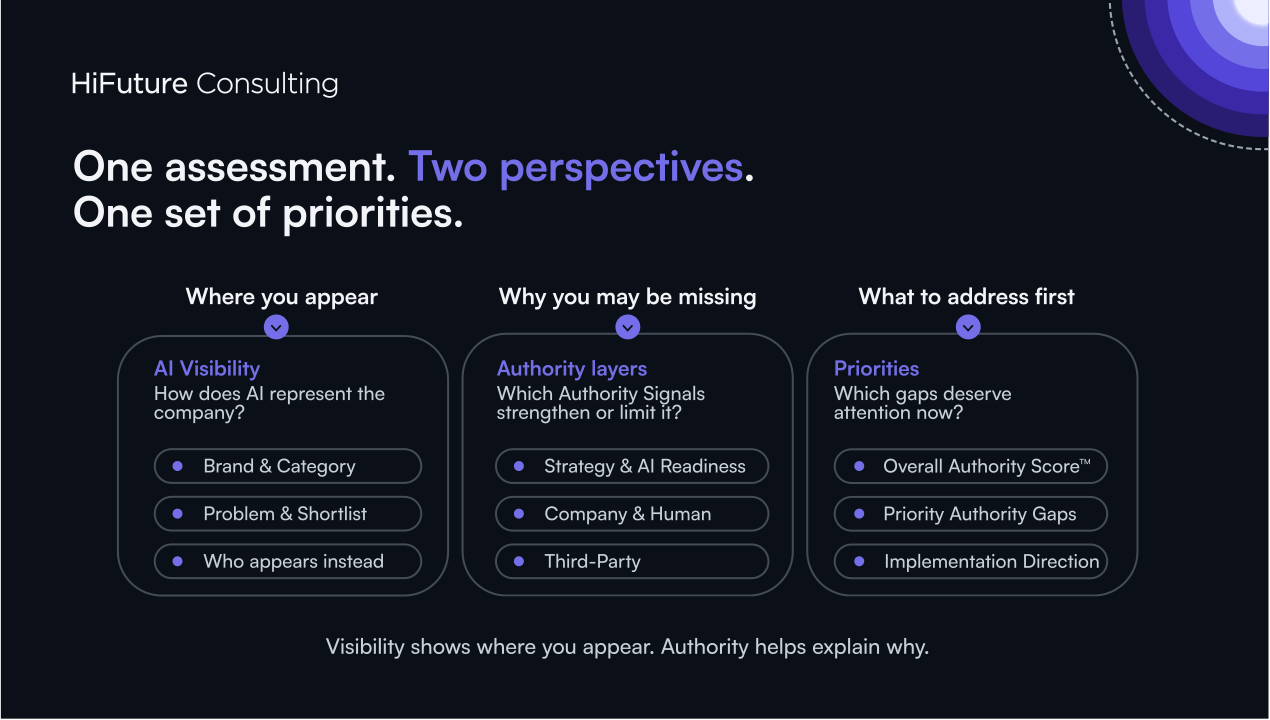
Figure 2. One assessment, two perspectives, one set of priorities. Source: HiFuture Consulting, 2026.
Why does prioritisation matter more than more activity?
Marketing teams rarely run short of things they could do. There is always another website improvement, another article, another expert to activate, another PR opportunity or another AI optimisation recommendation.
The harder question is what deserves priority now. An unclear category, weak expert visibility, limited customer proof and absence from shortlist prompts are very different problems. They shouldn’t automatically compete for the same budget or the same management attention.
A useful assessment changes the conversation. The question “What else should we be doing?” becomes “What is limiting us today, and what should we address first?”
What does a CMO get from the assessment?
The assessment turns the diagnosis into a management view of what matters next:
- AI Visibility and Competitive View. How the company appears across Brand, Category, Problem and Shortlist prompts, where it is absent, how it is interpreted and which competitors appear instead.
- Overall Authority Score™ and layer scores. A structured view of the strength of the whole authority system, including Strategy & AI Readiness, Company Authority, Human Authority and Third-Party Authority.
- Priority Authority Gaps. The gaps most likely to limit the current position, separated from those that can wait.
- Implementation Direction. Practical priorities for what to clarify, strengthen or build next across content, experts, PR and other authority-building work.
- Executive Findings Session. A review of the findings with Marketing and leadership to agree on the next strategic priorities together.
What should CMOs do before the next AI visibility budget?
1. Establish the baseline before allocating budget
Before choosing between website work, thought leadership, digital PR, executive activation or other investments, understand the current position. Spending without a baseline makes it hard to tell later what actually changed.
2. Test visibility without naming the brand
Brand recognition matters. Category, Problem and Shortlist questions show whether the company enters consideration while the buyer is still deciding who belongs in the market.
3. Look across the company as a whole
The website, experts, LinkedIn, PR, customer proof and partner ecosystem may have different owners internally. Buyers and AI systems encounter the combined result. Diagnose that combined picture before optimising individual channels.
How can you run a quick self-check?
A short self-check shows the symptoms. It won’t explain the causes, and it’s still a good place to start.
- Open ChatGPT, Gemini, Perplexity and Claude.
- Ask each one the four prompt types from the table above, with your own category, problem and need in the brackets.
- For every answer, write down whether your company appears, how it is described and which competitors appear instead.
- Compare the four prompt types. A strong Brand result with weak Category, Problem or Shortlist results is the signal to look at the authority layers behind it.
Frequently asked questions
What is AI visibility?
AI visibility describes how AI systems represent a company when buyers use them to research a category, a problem or potential vendors. It covers whether the company appears, how it is described and which competitors appear alongside or instead of it.
What is the difference between branded and unbranded prompts?
A branded prompt names the company, for example “What does [Company] do?” Unbranded prompts describe a category, a problem or a buying need without naming any vendor. They show whether a company enters consideration when the buyer doesn’t know it yet.
What is the Overall Authority Score™?
The Overall Authority Score™ is part of HiFuture’s AI Visibility & Authority Assessment™. It gives a structured view of the strength of a company’s authority system, with separate scores for Strategy & AI Readiness, Company Authority, Human Authority and Third-Party Authority.
Does a company need more content to improve AI visibility?
Sometimes, though often the gap lies elsewhere. A company that is absent from Category or Shortlist prompts may have an unclear category, low expert visibility or limited independent validation. An assessment helps identify which of these limits the position before more content is produced.
Where to start
Start by understanding where you stand. Know how your company is currently represented in AI, understand what may be strengthening or limiting that position, and then decide where to focus investment.
If you want to understand where your organisation stands today, book a free strategic consultation with HiFuture. We can look at the category you want to compete in, how your company currently appears in AI-assisted research, and whether an AI Visibility & Authority Assessment™ makes sense as the next step.