For years, Thought Leadership on LinkedIn had a clear purpose. It made expertise visible, shaped how buyers understood a problem and built credibility. That purpose still holds. In 2026 the same content started doing a second job as well: it puts organisational expertise in a place that AI systems already use as a source.
LinkedIn AI visibility describes how often, and in what context, AI assistants draw on LinkedIn content when they answer questions about companies, markets and expertise. Two studies published in 2026 ranked LinkedIn as the second most-cited domain in AI answers. In one of them, three out of four LinkedIn citations came from individual members. For a CMO, this turns expert content into part of the company’s AI visibility.
Main points
- Semrush and Meltwater with LinkedIn both ranked LinkedIn second among cited domains, using different datasets and methods.
- In the Meltwater and LinkedIn research, 75% of LinkedIn citations came from individual members and 25% from Company Pages.
- 51% of cited members had fewer than 10,000 followers, so a smaller audience can still be cited.
- Thought Leadership now serves two audiences: buyers who need useful thinking and AI systems that need context to attribute expertise.
- The strategic question for a CMO is which expertise the market should associate with the company, and through whom it should become visible.
Why does LinkedIn matter for AI visibility?
Two independent studies published in 2026 point in the same direction.
| Study | Dataset | LinkedIn’s position |
| Semrush, March 2026 | 325,000 prompts across three AI search tools | Second most-cited domain |
| Meltwater with LinkedIn, May 2026 | 9.5 million citations across six AI platforms and 16 B2B categories | Second most-cited domain |
The datasets and methods differ, so neither ranking should be treated as universal. Both still show LinkedIn among the sources AI systems use when they answer questions about companies, markets and expertise.
For CMOs, that changes the role of the platform. LinkedIn works as a distribution channel and, increasingly, as part of the infrastructure through which buyers and AI systems discover and assess expertise.

Figure 1. LinkedIn ranked second in two independent 2026 studies. Sources: Semrush, March 2026; Meltwater with LinkedIn, May 2026.
Who gets cited when AI uses LinkedIn?
The people behind the content matter more than the pages. In the Meltwater and LinkedIn research, 75% of LinkedIn citations came from individual members, while 25% came from Company Pages.
The same research found that 51% of cited members had fewer than 10,000 followers. Expert visibility depends on more than audience size. A smaller audience can still matter when an expert becomes clearly associated with a specific problem, topic or category.
This is where Human Authority enters the AI visibility conversation.
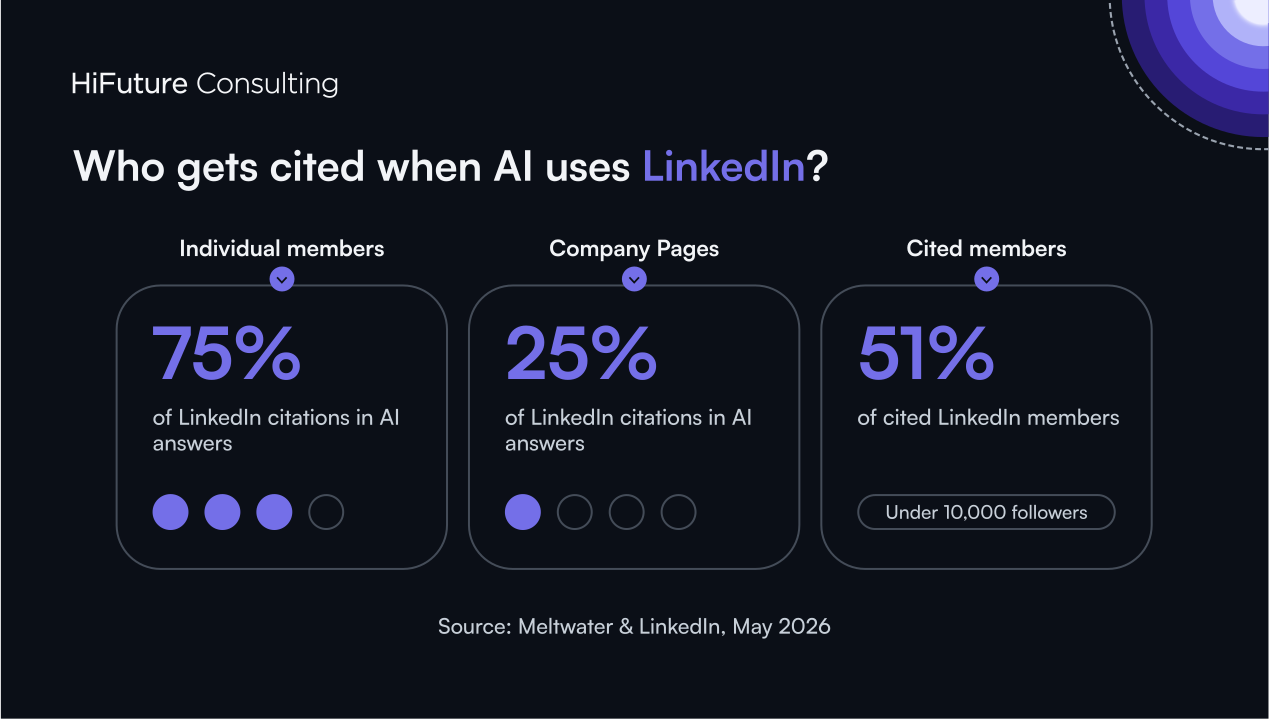
Figure 2. Who gets cited when AI uses LinkedIn. Source: Meltwater with LinkedIn, May 2026.
What are the two jobs of Thought Leadership?
The first job is familiar. Expert content influences buyers. It shapes how people understand a problem, a category or a vendor, and it travels across the buying group.
The second job is newer. The same content builds Human Authority Signals for AI systems. It creates public connections between an expert, their expertise, a topic and the company they work for.
That means Thought Leadership now has two audiences:
- The buyer, who needs useful thinking.
- The AI system, which needs enough context to understand and attribute the expertise.
Writing for both audiences comes down to making expertise clear, specific and attributable. Content written only to please algorithms rarely helps the buyer, and the buyer is still the one who signs.
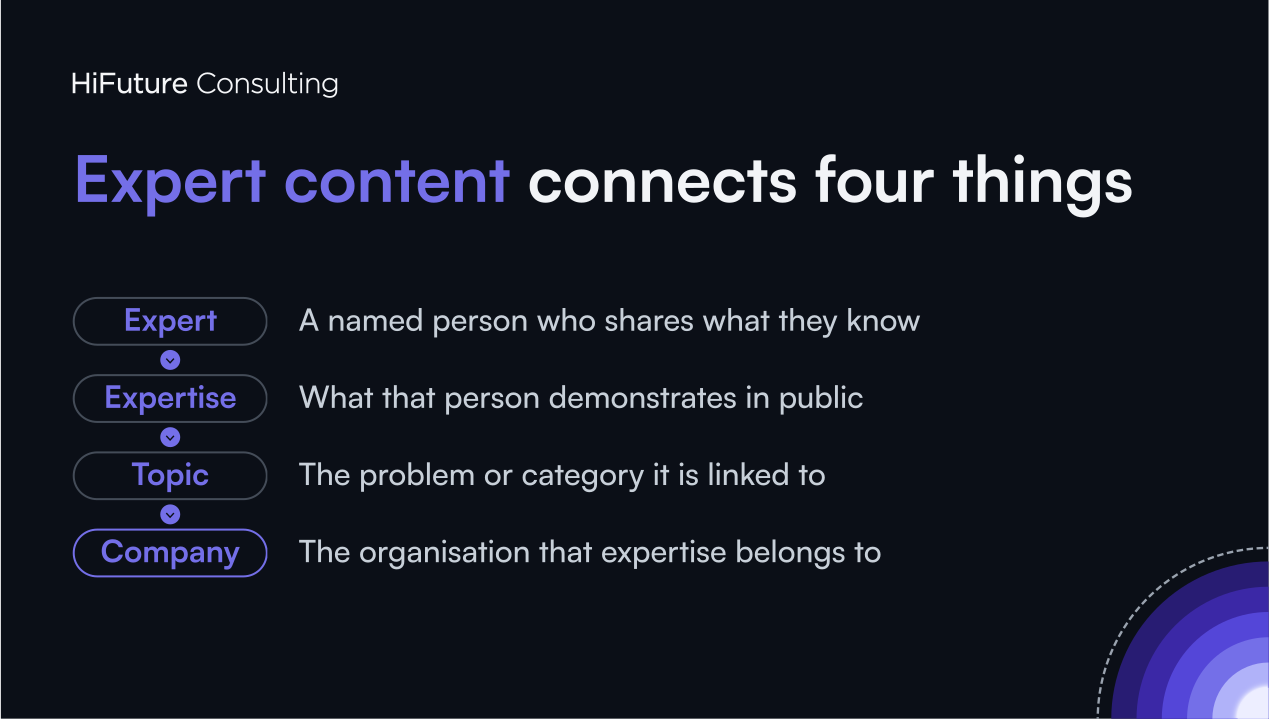
Figure 3. The connection that expert content builds for buyers and AI systems. Source: HiFuture Consulting, 2026.
What counts as Human Authority beyond posting?
In HiFuture’s Authority Signals Model™, Human Authority answers one question: who demonstrates the expertise? Thought Leadership turns strategically important organisational knowledge into visible Human Authority.
Human Authority Signals can come from:
- LinkedIn profiles and content
- articles and comments
- expert pages on the company website
- webinars and video, including YouTube
- public speaking
Each of these formats links a named person with a topic in a public place. LinkedIn is one of them, and the studies above show why it carries particular weight today.
Which question should guide an expert programme?
Many programmes start with the question “How do we get our experts to post more?” It leads to volume targets and reminders.
A more useful starting point is this: which expertise does the company need the market to associate with it, and through whom should that expertise become visible? The answer defines topics, people and channels before anyone writes a post. That is a very different brief.
What should CMOs do next?
1. Treat LinkedIn as part of the organisation’s authority infrastructure
If AI systems increasingly use LinkedIn as a source, its role goes beyond distribution and engagement. Decide which expertise, topics and category associations the company needs to make visible there.
2. Build an expert architecture
An employee advocacy programme asks people to share. An expert architecture decides which expertise matters strategically, who should represent it and where it needs to become visible. Executives, subject-matter experts and Sales professionals can play different roles and cover different topics.
3. Design Thought Leadership for durable Human Authority
Engagement still matters, and reach is one outcome among several. A stronger programme builds persistent associations between expert, expertise, category and company, so buyers and AI systems understand who knows what and why that expertise is relevant.
Frequently asked questions
What is LinkedIn AI visibility?
LinkedIn AI visibility describes how AI systems use LinkedIn content when they answer questions about companies, markets and expertise. It covers whether a company’s people and pages are cited, and which topics they are associated with.
Do experts need a large following to be cited by AI?
The data suggests a large following helps less than a clear topic. In the Meltwater and LinkedIn research, 51% of cited members had fewer than 10,000 followers. A clear association with a specific problem, topic or category appears to matter more.
What are Human Authority Signals?
Human Authority Signals are public evidence that named people in a company hold specific expertise. They include LinkedIn profiles and posts, articles, expert pages, webinars, video and public speaking. They form one of the three groups in HiFuture’s Authority Signals Model™.
Do Company Pages still matter for AI visibility?
Yes. Company Pages accounted for 25% of LinkedIn citations in the Meltwater and LinkedIn research. Individual members accounted for the other 75%, so a company that relies only on its page leaves most of that space to others.
Where to start
Thought Leadership on LinkedIn still influences buyers. It also creates visible, attributable Human Authority Signals in an environment AI systems already use as a source. The question for CMOs has moved from “How do we get more experts posting?” to “Which expertise do we need the market and AI systems to associate with our company, who should represent it, and how do we build those signals consistently over time?”
If you want to work through that question for your organisation, book a free strategic consultation with HiFuture. We can look at the expertise your company needs to be known for, the people best placed to represent it and how your experts currently appear.